The Perfidy of Adobe: The Photoshop “Cloud” Problem

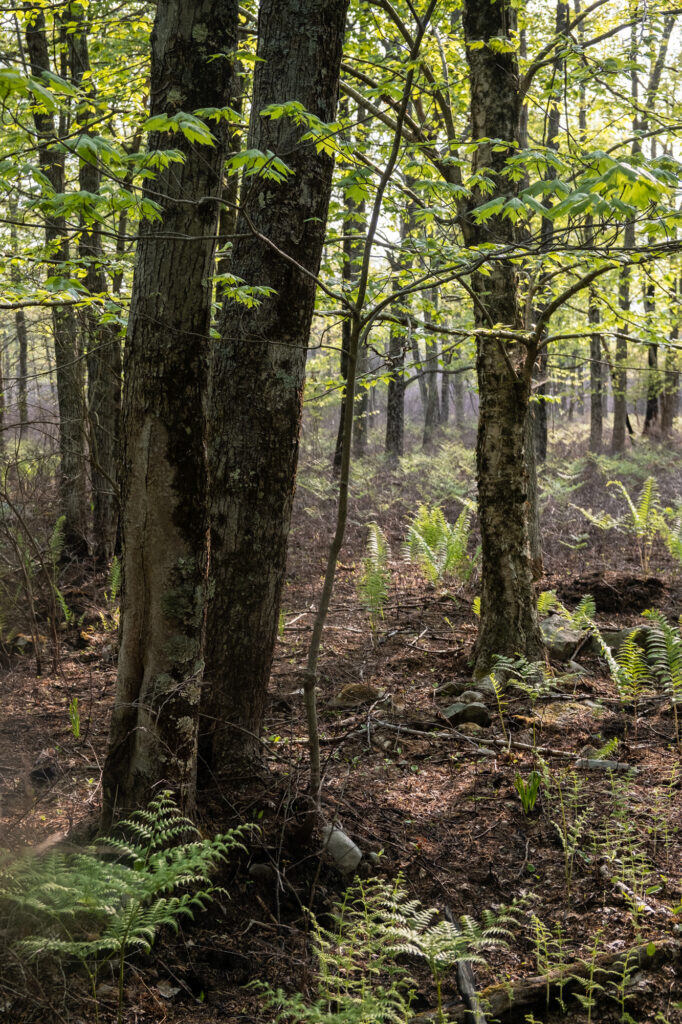
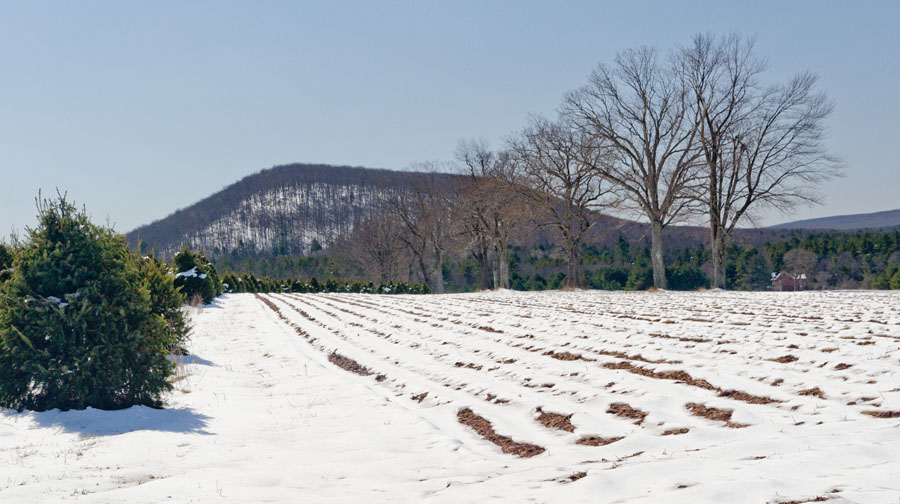
May Morning at the Old Farm (Fujifilm X Pro1,XF18-55mmF2.8-4 R LM OIS)

Like many photographers, I’ve used Photoshop Software for many years.  I think the first version I owned was Photoshop 6, I’ve consistently upgraded version by version since that release.

This was necessary in part, because I am a raw file shooter, and as we all know, Photoshop does not perpetually update Camera Raw for all new models, unless you have purchased the newest version.

I’ve accepted this, like most other photographers as the cost of doing business.  And I recognize that Photoshop is an extremely powerful program, and I’m sure quite expensive to manage and update.  So the $180 I typically pay for an upgrade roughly every two years seems justified.

Now I have no issue with companies profiting from the intellectual property they have cultivated.  But Adobe’s latest moves have me befuddled.

As many people know, Adobe has decided to forgo further Photoshop version releases.  Instead Photoshop will be a program that you’ll license, and for its use pay a monthly fee .  This new system requires that the computer where the software resides, periodically check in with the mother company for confirmation that the user has paid his tithe to Adobe.  That monthly fee for basic access to Photoshop, (after a yearlong discount) will be roughly $20.00 a month, or obviously $ 240 a year.

So instead of $180 every two years, I will be paying $480 for the same time period.

Granted, one will have use of a constantly evolving software product, with access to the newest updates.

I could understand a modest price hike to perhaps $10.00 a month, or $240 every two years.  But the current pricing is seen by many (including myself) as rapacious.

In many ways it’s an in-your-face challenge to photographers.  I think this policy has the potential to create a enough resentment, that many former users will look for a work-around, either holding onto their current version of Photoshop for as long as possible, or investigating other software.

This is especially poignant to me, as the user of Fuji cameras, and particularly the X Trans imager, for which Photoshop and camera raw are not the premier raw converter.  This fact has prompted me to purchase alternative software for raw development.

There are other software packages available for photo editing including several that are free, but not nearly as powerful as Photoshop.  However not everyone needs such feature rich software.

My style of photography for instance is more involved with the capture of the image than aggressive postproduction work.  For the most part images that I publish or sell, have had a modest amount of massaging, mainly levels adjustment, perhaps color balance or saturation changes, and then sharpening.  I occasionally use the healing brush, to remove an inconveniently located power line, or a piece of debris.  I’m not particularly enamored of high dynamic range images which always look unnatural to me.

I’ve never thought of myself as a particularly clever Photoshop user.  And it looks like I may not get a lot better now.

For now the raw files I produce are covered by Photoshop CS 6.  Given the relatively crappy job, Photoshop and Camera Raw do with X Trans files I have been getting comfortable using for instance Capture 1 in its place.  Perhaps GIMP, the somewhat Photoshop-like freeware program will be a” work around”.  Even Photoshop “Elements” May be useful.

No product or service, no matter how good and how ubiquitous, is ever essential.

I think Adobe is about to find this out.

Posted in Uncategorized | Tagged , , , , , , , , | Leave a comment

The Gear that I Use: The Fujifilm X100s

Spring Morning Web (Fujifilm X100s)

Right now, at least from a photographic standpoint, life is pretty damn good.

It has been several weeks since my initial discussion of the brand-new Fujifilm X100s.

Fujifilm X100s (Fujifilm Marketing)

Not infrequently people are asking, “Is it worth trading up to what on the surface is an almost identical camera.  Now as I have said before, I tend to be cheap. And not all upgrades are worth the money.

So my best answer is this: my beloved X100 has found a new home somewhere in northern Minnesota, having sold on eBay for a reasonably good price, but certainly still at a loss.

Yes, the X100s is that big an improvement.

Because there was no one was due to be at my home during the week the camera was to be delivered, I shifted to delivery my father‘s address nearby, where there would be someone available to sign for the package.  I stopped off at the end of the day, and opened the camera in his den.  I inserted a battery, and an SD card.

Now, it should be said that my father is somewhat bemused by my interest in photographic equipment. The whole “unboxing” thing is lost on him (which means he’s not crazy like his son).

I was fairly familiar already with the camera and quickly set it up to my preferred configuration, composed an image involving my father, and snapped a picture.  The camera selected iso 3200 and then opened the shutter.

When I finally got home and download the memory card, I realized that X 100s. was probably going to work out pretty well.

Dad in his Den (Fujifilm X100s)

So what are the real differences between this camera and its predecessor?  So far, for my use I’ve noticed several real improvements.

The first change that I noticed, right off the bat,  had to do with start-up speed.  The previous camera was extremely unpredictable in this regard.  Sometimes I would turn the camera on, and it would be ready instantly.  Other times (like when I would see a great shot and tried to grab it quickly) the camera would fail to activate until after the moment had passed. I cannot tell you how frustrating that was (note to Fuji: I forgive you, but just this once).

With X 100s, on means ON, and right now.  So far I have not missed any shots because of the delay in “boot up”.  For a professional user, this alone is probably worth the cost of the upgrade.

Probably the most important upgrade for my style of shooting has  to do with the operation of the auto focus.  Finally there is an X-body where selection of the auto focus point can be done with one’s eye to the viewfinder.  This was accomplished by moving the  AF button to the top of the multidirectional control, where he can be easily accessed by your right thumb.  Once selected, you can then use to control to move the square throughout the frame.  This is a huge improvement for those of us who rely on  auto focus.  This is the way it should have been designed originally.  I wish my X Pro-1 had the same feature.

Flox and Lamp Post (Fujifilm X100s)

The auto focus also does seem faster.  Before I sold my  X100 I did compare the 2 cameras side-by-side, and it did seem that the newer camera was more capable of locking onto poorly lit objects, and was somewhat faster.  I really didn’t mind the old system however.  None of these cameras focus like a good DSLR, but given what I use them for they don’t really have to.

Manual focus too has finally been perfected.  The focus ring finally moves the point of focus fast enough to be useful, and the new focus aids include a split screen function, and focus peaking.  I find that the former feature is more difficult to use.  Focus peaking however is extremely useful and seems very accurate.

It is true that the exposure compensation dial seems to be less prone to inadvertent changes.  I also like having the “Q” button available on the back of the camera.  I grown to find this feature useful in my X Pro-1 and is nice to have it here.

Spring Porch on Franklin Street (Fujifilm X100s)

The lens is essentially the same as the ex 100.  As I understand it can focus closer than on the old camera but otherwise to my eye it looks the same.  Like its predecessor the lens is fairly sharp wide open, but really gets interesting at f4.0 and beyond.  And the leaf shutter is just as silent as before.

In terms of image quality, basically it’s an X Pro-1 with a 23 mm lens (35 mm equivalent).  That is to say that the files are very good, with wonderful Fuji color, and excellent dynamic range (I can easily recover the highlights in the window behind my father).  There is lots of resolution for big prints.

It is somewhat vexing that as of this writing, Capture 1 does not support the X100s files, but I’m sure they will soon.  In the meantime ACR and Raw File Converter can both be used to convert the X100s raw files.  I’ve come to realize that for detailed landscape images, Raw File Converter is preferable because of the superior detail that it can reveal. I prefer ACR for a high ISO images and portraits, where it has a very nice smoothing effect on skin, and grainy images.

Bike and Mailbox (Fujifilm X100s)

The camera definitely has better low light capability than its predecessor:  enough that I now set the auto-ISO control on ISO 6400 (rather than 3200 on the X 100).

Now more than ever the camera is an ideal companion to one of its interchangeable lens brethren.  I love to shoot with the X pro-1 mounted with the 60 mm f2.4 lens, in the bag along with X 100s.  These cameras are very complementary to each other, with similar controls and essentially identical image quality.  And remember, the very useful X100s. focal length is currently unavailable in the XF lens catalogue.

Apple Tree, Dennison Farm (Fujifilm X100s)

All of this has made me very happy.  I wish I thought the auto focus button placement on the X Pro-1 could be upgraded through firmware, but so far there is no sign of this happening so far.  I imagine an X Pro 2 with the X100s focus improvements, and perhaps an even more improved sensor and I find myself salivating like a Pavlovian dog.

eBay I think, has not seen the last of me.

Posted in Photography, Uncategorized | Tagged , , , , , , , , , | 1 Comment

The Fujifilm X 100s: some preliminary thoughts

A Runner by the River (Fujifilm X 100s)

I am usually a late adopter.  If a new piece of equipment comes out, I’m cheap enough that I will generally wait until some time has elapsed and enough people have published their experiences with the equipment, before I make the purchase decision.

But when the Fujifilm X100s was introduced I was intrigued.  I love its predecessor, even for all its quirks, a few of which remain even after the latest firmware update. I have never enjoyed a piece of gear more, nor been more pleased with the images it produces. I sold my D 700, in part because the X100 replaced it for indoor event shooting.

I used the X100 all the time (for the year I owned it).  So when the update came out, I was not immediately interested.  But as I read reviews, I realized that this was a favorite camera now optimized.  I decided that rather than wait, I would place a preorder through B +H Photo.  They have a  strong return policy and I wasn’t worried that I’d be stuck with it if I were unimpressed.

It seemed to take forever for delivery, but my new camera finally arrived about three weeks ago. I’ve been shooting with it  ever since.

A Big Ol’ Pine (Fujifilm X100s)


So far I’m extremely happy with the X100s.  I will have a more complete report once I have a chance to shoot in a few more environments.  I am particularly excited to try out something that is also possible with its predecessor, high shutter speed flash synchronization.

So far however I am enjoying the hell out of the X100s, so much so that I have listed my X100 on eBay (Item number:321117326639).

So bear with me.  It was the X100 that shook me out of my photography doldrums.  Testing the “S”, particularly as spring erupts here in The Pocono region of Pennsylvania is a pure joy.

Stay tuned, there’s more to come.

Posted in Photography | Tagged , , , , , , , , , | Leave a comment

On the Gosnell Media Blackout.

Here’s an editorial published in the Wilkes-Barre  Times Leader on the Kermit Gosnell trial.

Commentary: Dr. Henry F. Smith Jr.

April 17. 2013 10:28PM

The national news media seems to cover every detail of seemingly inane events. We are bathed in coverage of the latest regarding Kim Kardashian’s pregnancy, or Tiger Woods’ latest romance. It’s a lead story in the national press when a Republican senator’s campaign staff is caught saying insensitive things about a potential political opponent on an illegal recording. But at the same time, the press is unwilling to cover apparently monstrous crimes that have taken place in our midst. We need to be asking why.

In Philadelphia right now there’s a trial underway involving gross misconduct of a physician (always good fodder for the news media). There are lurid details of dead bodies stored in rooms, dismembered corpses kept as trophies, underage untrained people performing gruesome medical procedures. The details are so graphic and so startling, that properly exploited, they would surely grow huge ratings in media outlets such as Court TV. But short of very select media coverage, there is an almost total press blackout of this story. The reason: the medical procedure this trial involves is abortion and the victims are babies.

Kermit Gosnell is a physician who ran a clinic called the “Woman’s Medical Center” in West Philadelphia. Apparently a major service there was performing abortions by the thousands each year. Dr. Gosnell, allegedly, would play fast and loose, with the gestational age of the fetuses he was paid to dispose of, allowing a woman the option of a later-term abortion than might actually be illegal.

When inconveniently, such an infant would have the temerity to be born alive, Dr. Gosnell according to testimony, had a solution. He would take a set of sharp scissors, open them, stab the points into the back of the baby’s neck, and then “snip” the baby’s spinal cord, killing it. Included in testimony, are very graphic descriptions of a baby’s typical reaction to this.

Workers at the clinic have described conditions as “raining fetuses”. The clinic has been described as filthy, with blood spatters on the wall. There has been testimony from underage workers, and workers with no formal training, who performed the ultrasounds used to determine the fetal age. After all… No point in being too accurate about that sort of thing.

Apparently Dr. Gosnell was happy in his work. He cheerfully described one particular late-term fetus that he dispatched as being “big enough to walk me to the bus stop”. He allegedly kept body parts of his victims in jars.

And from the press: The sound of crickets, chirping.

At some sadistically twisted level, it is possible to feel a degree of sympathy for Dr. Gosnell. After all, he was just trying to give good and complete value for the fees he charged. His “clients” had one request, that their pregnancy be terminated, and that no living baby would survive. And remember, he practices in a litigious society, where a patient actually sues her abortionist when she ends up with a live healthy baby rather than a jar full of parts.

What’s the difference whether the vivisection occurred in the vaginal canal or on the operating table a few minutes later? Quite honestly, in a society that permits the slaughter of innocents, such nuances should be inconsequential. Hey, our own president has supported legislation in Illinois, that would have allowed fetuses born alive, to expire without medical care.

Ann Coulter has written that abortion is the “sacrament” of liberalism. On a first read, I thought she was just being provocative. Watching the news media boycott this trial, an event that, given its sensationalism could be a huge driver for network ratings and profits, is chilling. Clearly burying the details of this gruesome court proceeding, which could cause harm to the institution of abortion, trumps all other concerns.

To liberals in the press, or put another way, to the entire media complex, this case is radioactive. It threatens to demonstrate that we can truly not rationalize the moral choices we’ve made — the “devil’s bargain” that we have struck, to permit legalized abortion. The arbitrary age limits, and the limits we place on the procedure, and particularly when and where the killing may occur, are indefensible morally, and logically. Dr Gosnell’s true crime was to violate the self-righteous boundaries we have placed on this brutality, so we may delude ourselves that we remain a moral society.

If he is guilty of the crimes for which he is charged, Kermit Gosnell is indeed a monster. But that barbarity in part, would extend from actions defended as a cornerstone of liberal ideology. He allegedly just took it to the next logical step.

That’s why they don’t want us to know about him.

Dr. Henry F. Smith Jr. is a pulmonary and sleep physician from Fairview Township.

Posted in Politics | Tagged , , , , | Leave a comment

The Gear That I Use: The Fuji XF 14mm f2.8 ( and a little more on Trans X conversion)

Dixieland ( Fujifilm X Pro 1, XF 14mm f 2.8 @ f2.8)

I am not a generally a wide angle shooter. When many years ago, I began to get serious about outdoor photography  I, like many other photographers just starting out, assumed that proper landscape photography was most appropriately done with short focal length lenses encompassing a wide field of view.

It seems to me this is a very common beginner’s mistake. I quickly found out that capturing scenes that are attractive to the naked eye using such lenses, often created a visually uninteresting, unfocused image. Too wide a field of view can leave an image without much of a focal point, with which to draw the viewer “into the picture”. Wide angle lenses also offer little magnification of distant objects, and can make a scene, for instance with a backdrop of mountains, appear uninteresting relative to the photographers own visual viewpoint.  Longer focal lengths work better for this.

But ” wide’s” have certain advantages.  They can make linear objects appear longer and more dramatic.  They do this in the same way they  deemphasize distant objects; by making the end of a fence line, or road appear further away.   They have better depth of field than longer lenses.  This can all be used to one’s advantage.

Danger Keep Out (Fujifilm X Pro1, XF 14mm f 2.8)

I have noticed over the years, that a lot of my truly wide-angle lenses like my Tokina 12-24 mm for DX, did not get much use. I seemed to gravitate into shooting mid-range and mild telephoto zooms and primes for landscape, which in my mind allows better isolation of the subject, and improves with prominence of the background  as well as the bokeh  of most of the photos I produce.

Nonetheless, when Fujifilm introduced its XF 14mm f2.8 R optic, I just sold some equipment, and had a little extra cash. Because of the affection I have for the system, and the excellent reviews of this lens,  I figured it would be reasonable to acquire one for myself, and perhaps reinvigorate my wide-angle photography.

I ordered one up from B&H in New York, and as it often is the case, it arrived on the next day.

The lens itself is fairly large. If anything it’s a bit larger than the XF 18-55 mm midrange zoom lens with which it shares its petal shaped sunshade . It has a detented aperture ring, a fairly broad focusing ring, and in a touch reminiscent of my Tokina glass, a slip clutch that allows a quick switch from auto focusing, to manual focusing.  It also has a focus distance scale embossed in the front of the lens.  It is the best finished of the XF primes that I own.

The Lens ( Nikon D 7000, Nikkor 16-85mm f3.5)

Like all the XF lenses, it feels extremely well-built, and balances nicely on my X Pro 1.

You can read the reviews. Pretty universally, the lens is thought to be quite sharp, pretty much edge to edge by f4. Also in different from other XF lenses, its native and distortion is very low, and there is little, if any correction required in software.  This is great for architecture, but sometimes leaves one wanting, if you’re looking for that slightly fish eyed perspective that can make some portraits and street shooting visually interesting.

I do not intuitively shoot with wide-angle lenses.  For me it is a challenge, but certainly a joyful one. Given the drab browns of early spring. I find myself looking for unusual patterns particularly in shadow and light, and opportunities to find color in the bland surroundings.

The Little Bridge ( Fujifilm X Pro 1, XF 14mm f2.8)

My copy of the lens seems as sharp as advertised.  Autofocus is slightly slow, but again you’re not going to use this lens for sports or action photography.  I think it is better specified for deliberate shooting.  Flare is extremely well controlled.

The time of my testing of the new lens, was coincidental with the availability of Camera Raw version 7.4, the final release. I had already played with the release candidate, and was eager to see whether the final version offered additional benefits.

Pine Plantation ( Fujifilm X Pro 1, XF 14mm f2.8)

I developed a number of X Pro 1 images, with Capture 1 Express, and then again with the newest version of ACR. I didn’t notice much difference between the release candidate, and the final version, but I agree that Adobe has clearly improved the raw file extraction since its earlier efforts, probably to a point where in most situations the differences between its capabilities, and those of competitive raw converters, are minimal.

Trust me, I spent a lot of time on the sharpening of both images. Still, particularly in looking at prints, I think for fine detail, looks more natural and dimensional in the Capture 1 (and the Fuji Raw File Converter) results.

100% Crop ACR

100% Crop Capture 1

Yeah, I know, the ACR image has a different color signature, than the one done on Capture 1.  Try as I might in ACR, I had a really difficult time duplicating the color balance on the second image which to me  were the colors that I was seeing at the time the image was shot.  I think this is an idiosyncratic situation, and not typically a problem for ACR.

You can be the judge, but to my eye, color aside, the second image looks much better,  slightly in terms of detail perhaps, but with significant improvements in micro contrast.  To me it just looks more real.  And it prints that way also.

All this aside, I think this additional lens, and the improving  options for raw file conversion are really great enhancements for the Fuji X interchangeable lens bodies.  I continue to love shooting with them.

Oh, and I’ve pre-ordered an X 100s.

It’s going to be a fun Spring.

Posted in Photography, Uncategorized | Tagged , , , , , , , , , | Leave a comment